Vegetarian, vegan and halal at Maya Restaurant
What the Maya Restaurant FAQ says about halal food and vegetarian and vegan options, which starters carry the menu's v marker and what to tell the team before you order.
By mayalounge.com · · 3 min read
WHETSTONE, LONDON Maya Restaurant’s FAQ says the kitchen serves halal Lebanese and Mediterranean dishes and that the menu includes vegetarian and vegan options, and it asks guests to discuss their requirements with the team before ordering. This article sets out what the menu itself shows and where to ask for more.
The absence of a marker does not mean a dish is unsuitable either.
What halal means here
Halal is Arabic for permissible. According to Wikipedia, pork and blood are forbidden, and the slaughter of animals follows set rules. At Maya Restaurant the word applies to the food: the FAQ says the dishes are halal, and it asks guests who want to confirm the ingredients or preparation of a particular dish to speak to the team before ordering. It does not describe the venue as a whole, which also has a bar serving cocktails, wine and spirits.
Dishes marked v
Seven items on the Food & Desserts menu carry a v marker:
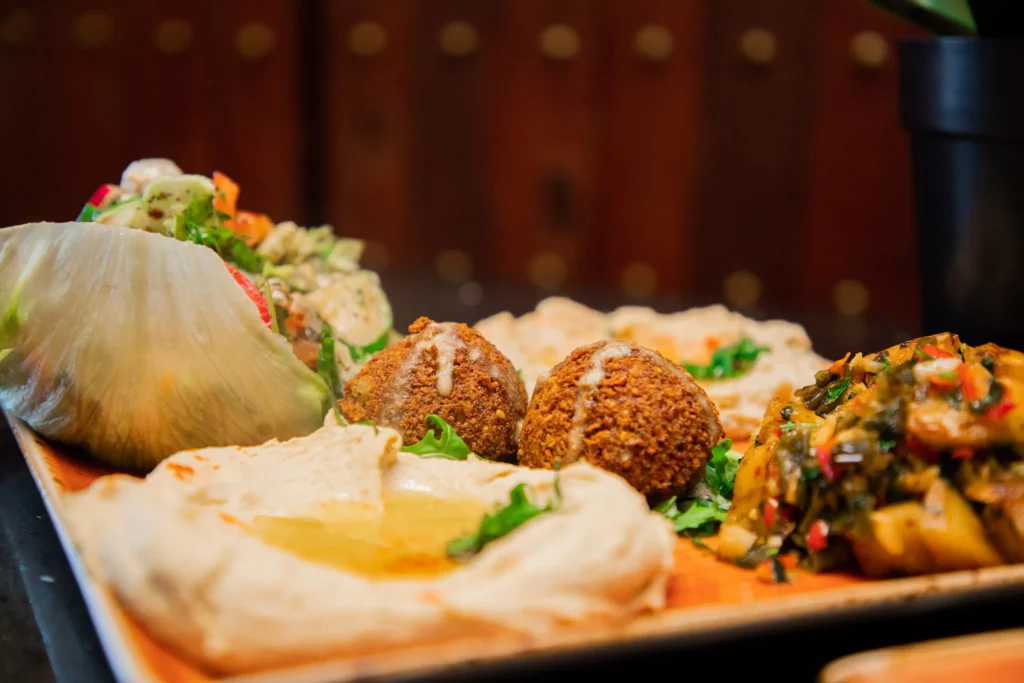
- Hommous, £9: purée of chickpeas with sesame oil and lemon
- Moutabbal, £9.50: purée of grilled aubergine with sesame oil and lemon
- Batata Haraa, £9: potatoes sautéed with garlic, coriander, spices and peppers
- Falafel, £9: deep-fried chickpea croquettes with garlic and coriander, served with tahini
- Kallaj, £10: grilled Lebanese bread filled with halloumi cheese
- Halloumi Cheese, £10: slices of halloumi cheese, grilled or fried
- Foul Mudammas, £9: broad beans with garlic, fresh tomatoes, herbs and olive oil
Reading the marker
The menu does not spell out what v stands for, and it does not mark vegan dishes separately. Two of the marked dishes are built around halloumi, a cheese, so the marker should not be read as meaning vegan. The FAQ says the menu includes both vegetarian and vegan options, so treat the marker as a starting point and confirm the dish with the team.
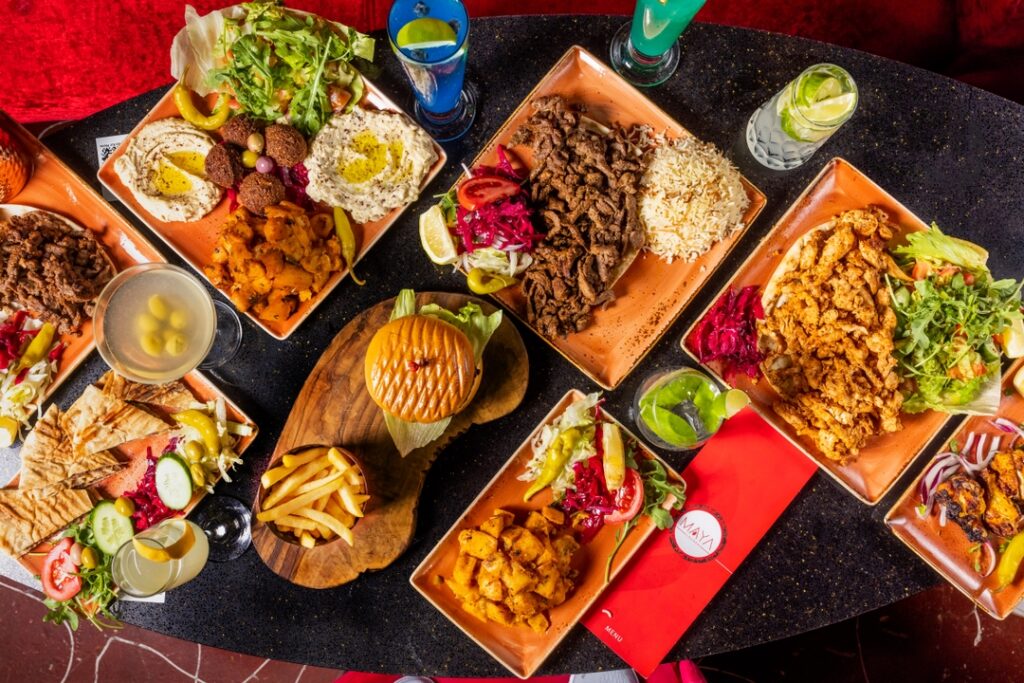
The absence of a marker does not mean a dish is unsuitable either. Salads such as the fattoush and the tabouleh carry no marker, and neither does the Mixed Mezze, £27, which serves four and is built from hommous, moutabbal, hot batata harraa and falafel salad. Three of those four components are marked on their own, but the menu does not mark the combination, so ask what is in it for your table.
Building a meal
A Lebanese meal is well suited to this kind of ordering. Wikipedia describes the Levantine meze as small dishes served in sequence, with olives, tahini, salads and yoghurt first, then vegetable and egg dishes, and the emphasis on sharing. A table can follow that pattern with dips, a salad and a hot dish from the list above, and ask the team to confirm each one. If one dish is all that a guest at the table can eat, say so, so it can be ordered in good time.
Telling the team
Tell the team about dietary requirements and allergies when you book and again when you order. Sesame, for example, appears in the menu descriptions of hommous and moutabbal, and sesame is one of the 14 allergens that food businesses in England must declare, according to GOV.UK; check GOV.UK for the current rules. The journal has a guide to how to tell the team, and the frequently asked questions page has the venue’s own answers.
To discuss requirements before you arrive, call 020 8446 3040. Maya Restaurant opens at 6pm.